


This is an edition of the newsletter Show Notes, in which Samuel Hine reports from the front row of the fashion world. Sign up here to get it free.
Earlier this week, Tremaine Emory launched what might have been one of the most ephemeral wheatpaste campaigns in the history of SoHo. Emory was debuting a line of Denim Tears jeans, the first to be made entirely by his brand after years of collaborating with Levi’s. The posters, printed on thin sheets of actual denim fabric, read “DENIM TEARS DENIM BY DENIM TEARS.” (Spot the Marc Jacobs reference.)
When I walked through the neighborhood on Tuesday on my way to the Denim Tears store on Spring Street, not a shred of indigo cotton was left anywhere in sight. Fans had been following the wheatpaste crews around and gingerly peeling the posters off as soon as they went up. “I haven’t even seen them in the flesh,” Emory told me, chuckling. “But I saw some videos of people taking them.”
To be clear, as far as Emory is concerned, the poster pilfering is fantastic, one of many signs of how much energy he has captured with his unapologetically political sportswear label. Another one: When I entered the Denim Tears shop under a prominent sign that says “African Diaspora Goods,” a gaggle of white preteens were using their parents’ credit cards to buy sweatpants.
Yet another sign: The cotton wreath motif that is emblazoned across the new denim line is recognizable (and bootlegged) the world over, a remarkable trajectory for a symbol that Emory devised in 2020 to signify cotton’s deep roots in American slavery.
Emory’s wild success and influence hasn’t come easy. There was the aneurysm that almost killed him in 2022, followed by his subsequent controversial exit from Supreme. And he’s had to contend with frequent sniping from critics who take issue with what they see as the commodification of painful histories. (To Emory, having these kinds of uncomfortable conversations is precisely the point.)
And yet, even as we’re told that woke is dead, Denim Tears—a brand originally devised as a way to Trojan Horse Black cultural narratives into the clout-drenched streetwear arena—is stronger than ever. The label does tens of millions in annual sales, and has reportedly doubled its revenues every year. Emory has minted collaborations with Dior, Stüssy, Comme des Garçons, and the Rolling Stones in addition to the wildly popular Levi’s partnership. A Tokyo store is set to open in 2026.
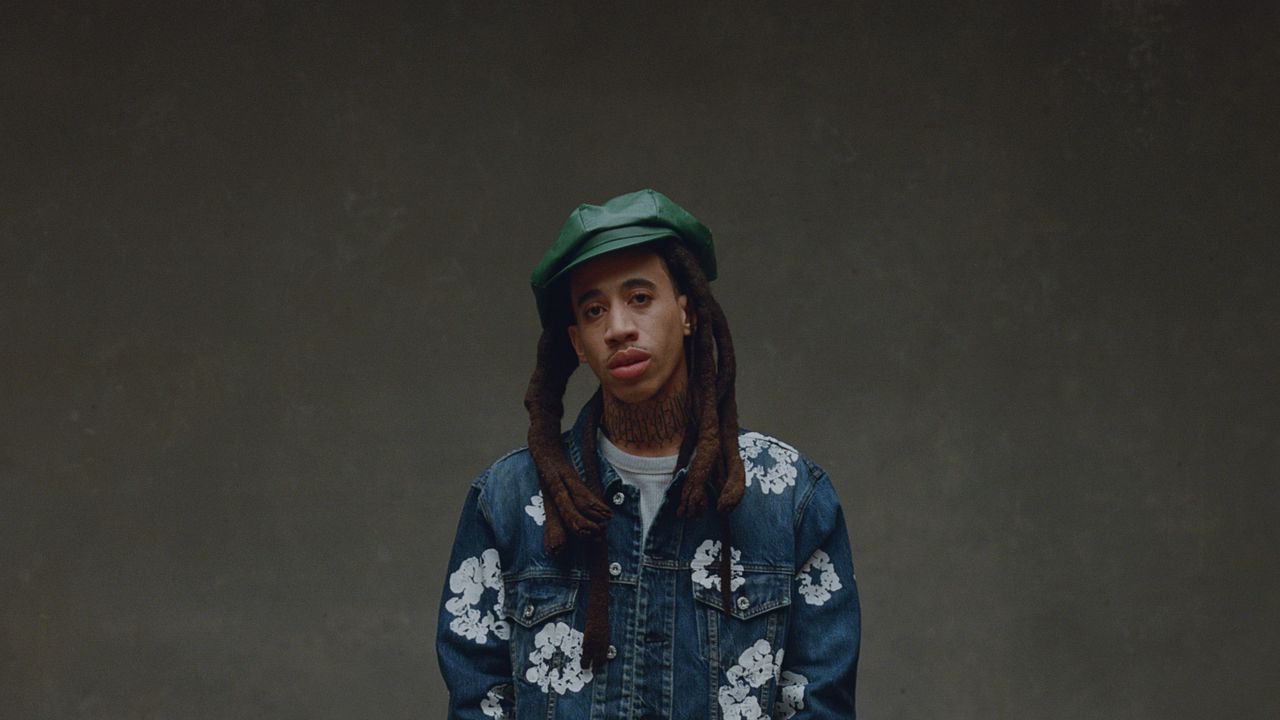
According to Emory, the new jeans program means that Denim Tears can be “as nimble as we want to be.” “It’s not an end to us working with Levi’s, it’s really about being able to switch up more often,” he said. The made-in-LA line includes trucker jackets and straight and baggy fit jeans in a range of washes, some printed with cotton wreaths and some without.
You can guess which ones will be the first to disappear from the shelves when they drop on December 12. Already, the launch has been greeted as significant, a win for Denim Tears and Emory’s supporters. As one commenter put it on Instagram: “Went over their heads already. Homegrown 💙.”
GQ: You were inspired by the artist Kara Walker to introduce the cotton wreath motif in early 2020. Did you ever expect it to become so ubiquitous?
Tremaine Emory: No, no way. I was grateful just to be able to come up with something that I felt was genuine. So to have it adopted by so many people, and the demand for it, and the bootlegs, the discourse about it, all of it has been incredible. I’m very grateful for it, but I did not predict it. This is what I knew: I knew it was beautiful, and I knew it had depth. And I know when you create something that is beautiful and has depth, anything is possible.
When it gets bootlegged and the more people wear it all over the world, the original intent behind it becomes sort of abstracted. Does it matter if people know what it means?
I think that the interesting part about symbols is that they remain whether they’re recognized or not. So for me, even if it’s a bootleg and it’s worn by someone that has no idea what it means, they’re still a billboard for the message. If someone doesn’t know a peace symbol is a peace symbol, it’s still a peace symbol. A peace symbol is a talisman for peace. And the cotton wreath is a talisman for America. Most people don’t know that denim was originally called Negro cloth and it was worn by slaves. Indigo dying was brought over from Africa and done by slaves. So denim fabric started with oppression, started with slavery, and became this iconic American thing. It’s the most sold clothing item in the history of humanity.
I was lucky enough to run into Ken Burns last month. He’s one of my favorite artists of all time. It was at a little cafe in SoHo, and I caught him in the morning picking up my Greek yogurt before work. I had just watched the Ernest Hemingway documentary he did, and I just started the one he’s done on jazz music. So I was just talking to him about how incredible the work he and his team does, and he was talking about the importance of PBS. He just said it’s important for everyone to see this stuff. You can’t understand humanity by just looking at horrible things, and you can’t understand humanity by just looking at the beautiful things that humans have done. You have to look at all of it. So I do my best to do that in my own way, like he does, but through my clothing brand. Sometimes we talk about slavery, and sometimes we talk about Alvin Ailey and Melvin Van Peebles and so on. But I’m not an academic. I’m a maker. I’m a creative director. So I get put onto things through these conversations too. It’s not just a one-way street. It’s fun, man.
Tell me about why you wanted to do Denim Tears denim.
We’ve been working on this for a couple of years now. We wanted to create a core denim program that was our own, and so we can be as nimble as we want to be. And it was a great working relationship with Levi’s for almost seven years, and I look forward to working with them in the future. It’s not an end to us ever working with Levi’s, it’s really about being able to switch up more often.
Are you surprised that more brands aren’t engaging with politics right now?
You know what, I feel everyone has to do what’s genuine to them. So that’s the real question: Are people being genuine? There have always been designers who have talked about the human condition, like Alexander McQueen and Vivienne Westwood. And then there are designers whose genuineness is about beauty and about fantasy. But I do think Denim Tears sticks out maybe like a sore thumb in the times we’re in.
You also have to look at whether the public is rewarding the brands and artists that do speak about these things. Do people feel that their genuineness will be rewarded? Versus if they make status symbols that separate customers from other people? But there are guys and girls out there that are doing it. Wales Bonner, Martine Rose, even people like Phoebe Philo. Do I think Phoebe is talking about politics? No, but I think she’s talking about the politics of being a woman. But in general I don’t know if the algorithm and the people’s dollars are rewarding those brands that are supporting women, telling stories of people of color, telling LGBT stories, you know what I mean? I don’t know if the kids are rewarding it.
I see your point, but they are rewarding your brand. And to me what you were doing felt radical five years ago even when there was basically broad agreement about Black Lives Matter and #MeToo and DEI, and now we’re in a very different moment. Did you notice a sales bump or increase in interest in what you have to say when our politics started to shift a year ago?
That’s a great question. No one’s ever asked me that before. I can answer the question this way. I left America to move to London in 2010, and I came back in 2018. So when I left Obama was president, and when I came back Trump was president. And I saw things differently after living in Europe and traveling the world. I DJ’d around the world working in fashion. I don’t know if I would’ve created the brand if I had stayed here. Brexit and Trump happening was the greatest inspiration to create the brand.
And post-BLM, post me leaving Supreme, there was a lot of discourse about the brand, because that was when everyone was calling people performative. And in 2024 I dropped a collection with a sweatsuit that had a graphic of the Schoolhouse Rock bill setting himself on fire with a stack of money. And it got panned on the internet. This sucks, what’s all this woke bullshit. But then it’s like a year later, we’re in a fucking recession. You know what I mean? I’m not a genius. Anyone that was paying attention saw it coming. And I think now the level has kind of set back to that I’m making clothing and it’s either for you or it’s not for you.
But I think that everything that I put out, people can tell it’s genuine. So that’s why I think going on year seven, the brand is still here. People still wear it. People love it. People have good things to say about it. Great people work with us. I’m not a perfect human being, but I’m genuine. So when I was doing stock at Marc Jacobs, I was genuine. When I’m running Denim Tears I’m genuine. When I was creative director of Supreme I was genuine. I can’t be perfect, but I can be genuine.
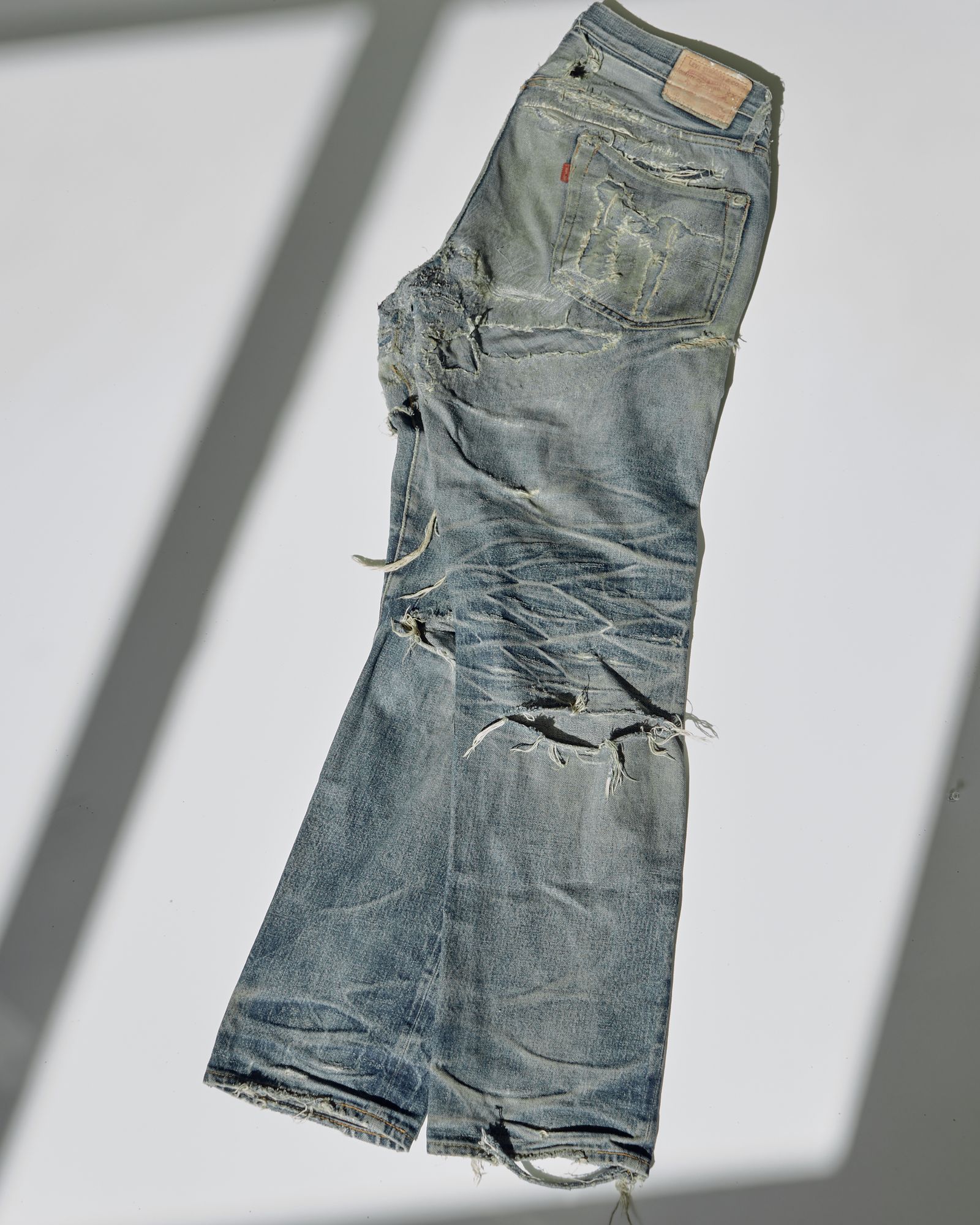
The Levi’s that inspired Tremaine Emory’s Denim Tears moniker
Courtesy of Denim Tears
Speaking of genuine, the name Denim Tears came from a pair of jeans you wore and destroyed for years. Did you revisit that lore when you were working on your new denim line?
Those jeans have always been a part of the story and the denim. I bought them jeans in 2010 from the Levi’s store on Carnaby Street in London. They’re a Levi’s Vintage Clothing reproduction of the 1954 cut of 501s. I wore those jeans around Europe and the world for I don’t know how many years. They were really ripped and done in by 2015, and there was a night where I was DJing with my crew US Steel, which was me, Benji B, Virgil, and Acyde. And they were basically cracking jokes on me, and someone said something about how my denim was crying. And what made it stick was Virgil started calling me Denim Tears on his blog at the time.
And then I started to get philosophical with it. Denim and humans, we start off new, and then attrition is what makes us right. The good things, the traumas, the glories, all of that makes us who we are. And then obviously when it’s time to make a brand, you need a name. I wanted to make a brand telling African-American stories. So I liked that Denim Tears was an inside joke, but that it also actually means something. Like I said, denim used to be called Negro cloth. And I think that’s the magic trick I try to do. If something is just cool or beautiful without depth, it’s pretty vapid. And if something has depth but it doesn’t have aesthetic to it, then it’s harder to attach to the story. So when you put those two things together, you can get the story off and get the aesthetic off.