



This story was featured in The Must Read, a newsletter in which our editors recommend one can’t-miss story every weekday. Sign up here to get it in your inbox.
On April 9, the last great hope in American-made selvedge denim will be auctioned off in Vidalia, Louisiana. Presided over by the Concordia County Sheriff’s Department, Vidalia Mills will sell off its assets, including land, buildings, and equipment to cover more than $30 million in debt. Included in the auction, presumably, will be 40-some American Draper X3 shuttle looms purchased from the fabled Cone White Oak denim mill in Greensboro, North Carolina, following its closure in 2017. The auction marks the end of America’s only industrial-scale selvedge denim manufacturer, but it’s just the latest chapter in the decades-long struggle to keep the dream of American-made selvedge alive.
For the vast majority of jeans-wearing people, the value of a pair of dungarees comes down to the fit, the brand name on the patch, and maybe the rinse. For die-hard denim heads, however, how and where a pair of jeans is made matters a lot. To those folks, selvedge—the old-school variety of denim with a telltale stripe of colored thread along its edge—is the purest expression of the genre. Original Levi’s 501s were made of selvedge, as were the jeans made by Wrangler, Lee, and countless other American brands in the 1920s, ’30s, and ’40s. Immortalized by guys like James Dean in Rebel Without a Cause, Marlon Brando in The Wild One, and Paul Newman in Cool Hand Luke, selvedge denim is the bedrock on which 20th-century American fashion was built.
Most of the world’s selvedge used to be produced in the United States—much of it at White Oak—but changing technology and the fashion industry’s relentless pursuit of ever-lower labor costs have pushed American textile manufacturing, and American-made selvedge, to the brink of extinction. Nowadays, most high-end selvedge is produced in Japan, a country whose economy supports a thriving ecosystem of textile mills and homegrown specialist denim brands. If you own a pair of selvedge jeans, whether they’re from a big brand like Levi’s or denim-head cult like Iron Heart, the fabric was probably milled in Japan.
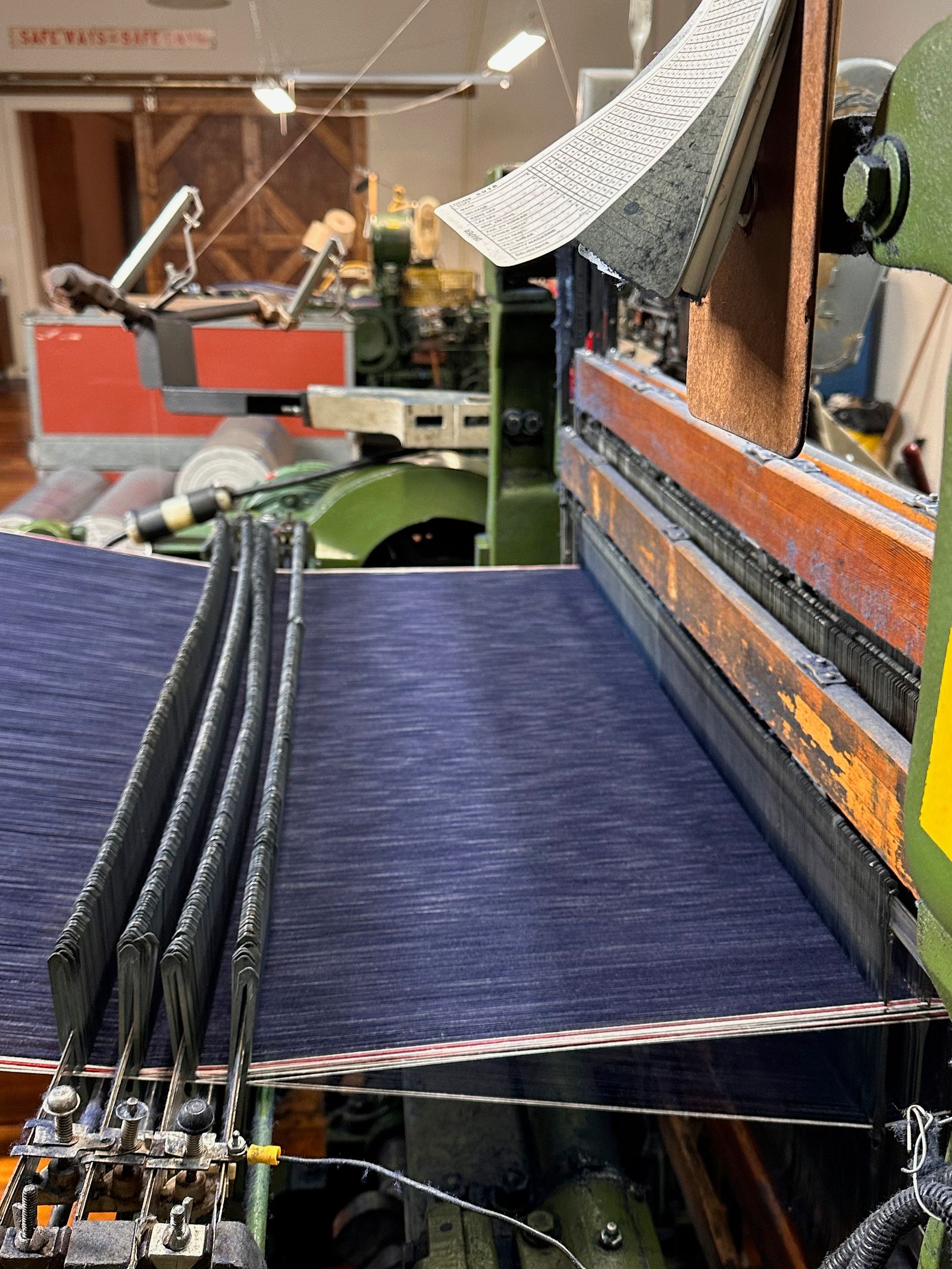
Selvedge denim is still produced on traditional shuttle looms at Proximity Manufacturing Company in Greensboro, North Carolina.
Courtesy of Proximity Manufacturing Company
In 2018, when Vidalia Mills moved into its factory—a 900,000-square-foot former Fruit of the Loom distribution center—the company’s stated ambition wasn’t just to pick up where White Oak left off, but to create an entirely new business model. As a vertically integrated denim mill, it promised to turn sustainably produced American cotton into an array of fabrics, including traditional selvedge, and create hundreds of jobs in the heart of the Cotton Belt. With White Oak’s demise still fresh, and a growing enthusiasm for authentic American workwear here and abroad, it seemed almost too good to be true.
Christian McCann, the founder of Left Field NYC, was among Vidalia’s first customers and had high hopes when he received his first order of the mill’s selvedge denim in 2020. “They were coming out with some interesting things,” he recalls. “They were working on natural indigo, they were working on Pima cotton. They were working on something where you could scan the weft and it would tell you what farm it came from.”
Scannable or not, the provenance of dungarees made domestically from American-grown cotton and woven on Draper looms was a big part of Vidalia’s appeal to denim heads and denim brands alike. So was the price. “The cost of flying in Japanese denim has just gotten so crazy high, it’s just ridiculous,” McCann says. “Being able to throw some rolls of denim on a tractor-trailer and ship it out in a few days was a huge factor.”
The dream, however, was short-lived. After encountering quality-control issues, customer service problems, and unfilled orders, McCann eventually gave up on Vidalia in 2024. What exactly went wrong isn’t clear, and no one from within the company is currently talking about it publicly, but by last fall things were looking increasingly dire. In September, Vidalia Mills announced a rebrand while attempting to raise $7 million to “overcome funding delays and scale operations.” In October it reportedly laid off 30% of its workforce. A month after that it shut down operations and locked its gates.
“There are so many reasons for a business like that to fail,” speculates Jeremy Smith, the owner of Standard & Strange and an amateur denim historian. “Maybe they got whipsawed by the price of cotton. Maybe it was the sudden lack of demand during COVID. This stuff goes sideways so easily, especially in a high-stakes economic environment like the US. If you’re investor-backed, you’re typically being driven by a group of people who don’t understand your business and want returns at a rate that you may not be able to supply.”
In the latter case, it would echo the fate of White Oak, which ended its 110-year production run a year after being acquired by a California-based private equity company. While the selvedge denim produced at White Oak, and later at Vidalia Mills, was prized by enthusiasts for its look, feel, and historical clout, the antique Draper X3 looms used to make it are anything but efficient by modern standards, weaving narrow bolts of cloth at a fraction of the speed of their contemporary equivalents, and requiring a team of specialized technicians to run and maintain. Coupled with the relatively high costs of land and labor in the US, keeping White Oak running was less profitable than making conventional denim on modern looms overseas, and the bottom line won out.
 Courtesy of Proximity Manufacturing Company
“Part of the issue is that costs are out of control across the board for everyone,” says Smith. “Labor becomes expensive, buildings become more expensive, and the 10 to 15 bucks a yard for American-made selvedge denim becomes way too much money for volume production. It’s been the same story for a very long time.”
Whatever the cause of Vidalia Mills’ insolvency, anyone searching for a glimpse at the future of American-made selvedge might look to Trion, Georgia, where the 175-year-old Mount Vernon Mills remains a key supplier of services and expertise to smaller domestic denim producers, (including, for a time, Vidalia Mills.) As the country’s largest denim manufacturer, Mount Vernon Mills could be in a unique position to put Vidalia’s Draper looms back to work.
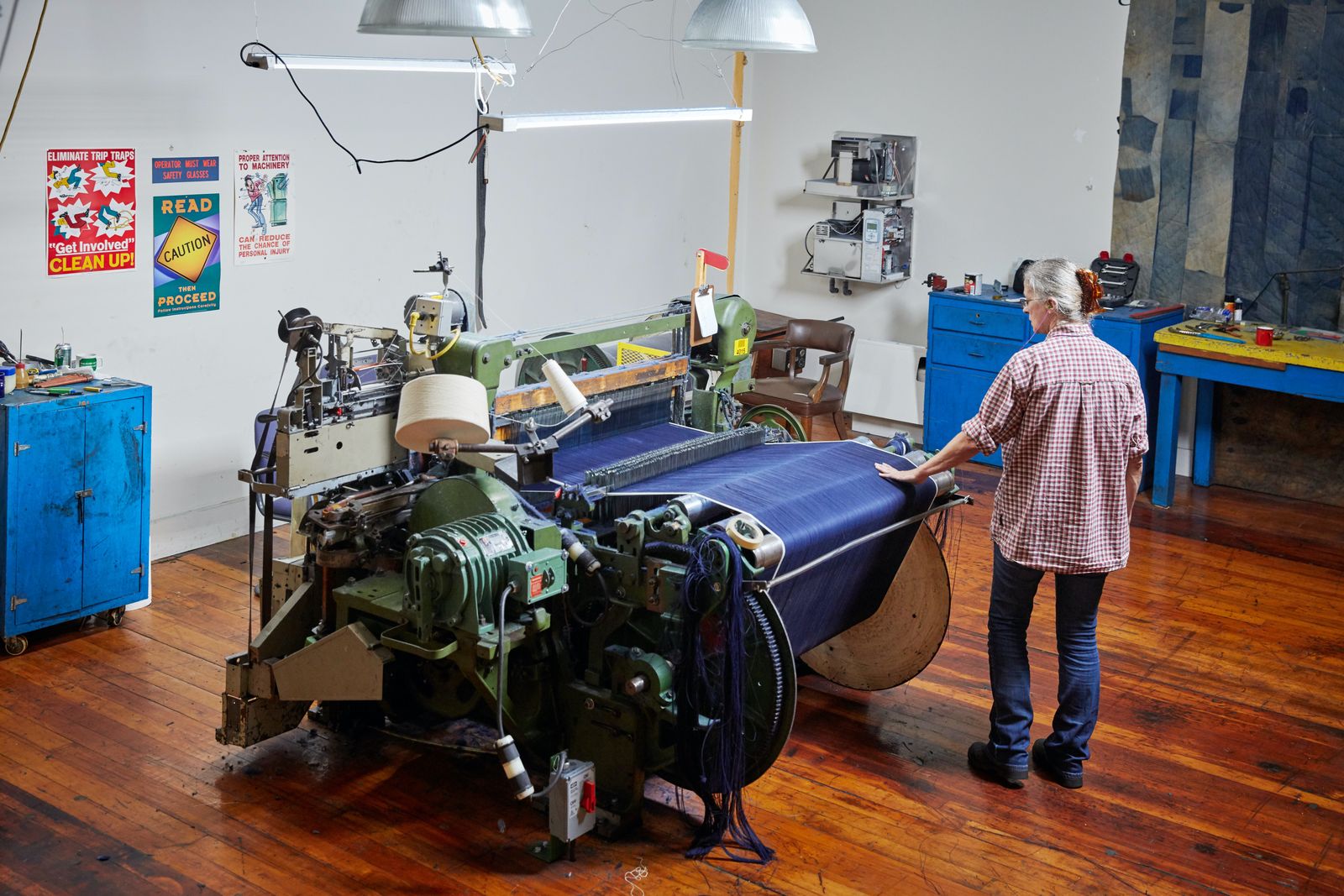
“What would really be great to see is if Mount Vernon Mills could acquire those shuttle looms, and we could help to keep them running,” says Evan Morrison, the operations director at Proximity Manufacturing Company in Greensboro, North Carolina. A subsidiary of the nonprofit White Oak Legacy Foundation, Proximity Manufacturing Company is part ultra-niche denim brand and part historical conservationist, producing small runs of artisanal selvedge denim on Draper looms salvaged from the old White Oak plant. “In a dream scenario, it would all get going again just like [at White Oak], when brands bought a day’s production and paid for what was made that day,” Morrison says. “That means if five brands each bought one day of the week, an iconic element of American history could be kept going for its third consecutive century.”
Morrison plans to attend the Vidalia Mills auction in Louisiana, and he’ll likely be joined by other interested buyers, one of whom might step up with a plan to put America back on the selvedge map. “There’s still this raw determination among the small intersection of denim heads and people who can finance companies to keep the dream alive, and someone is going to buy up those looms at auction,” Smith says. “My hope is that Proximity and White Oak are able to raise enough money to bring it back to life. Greensboro is called ‘Jeansboro’ for a reason.”