

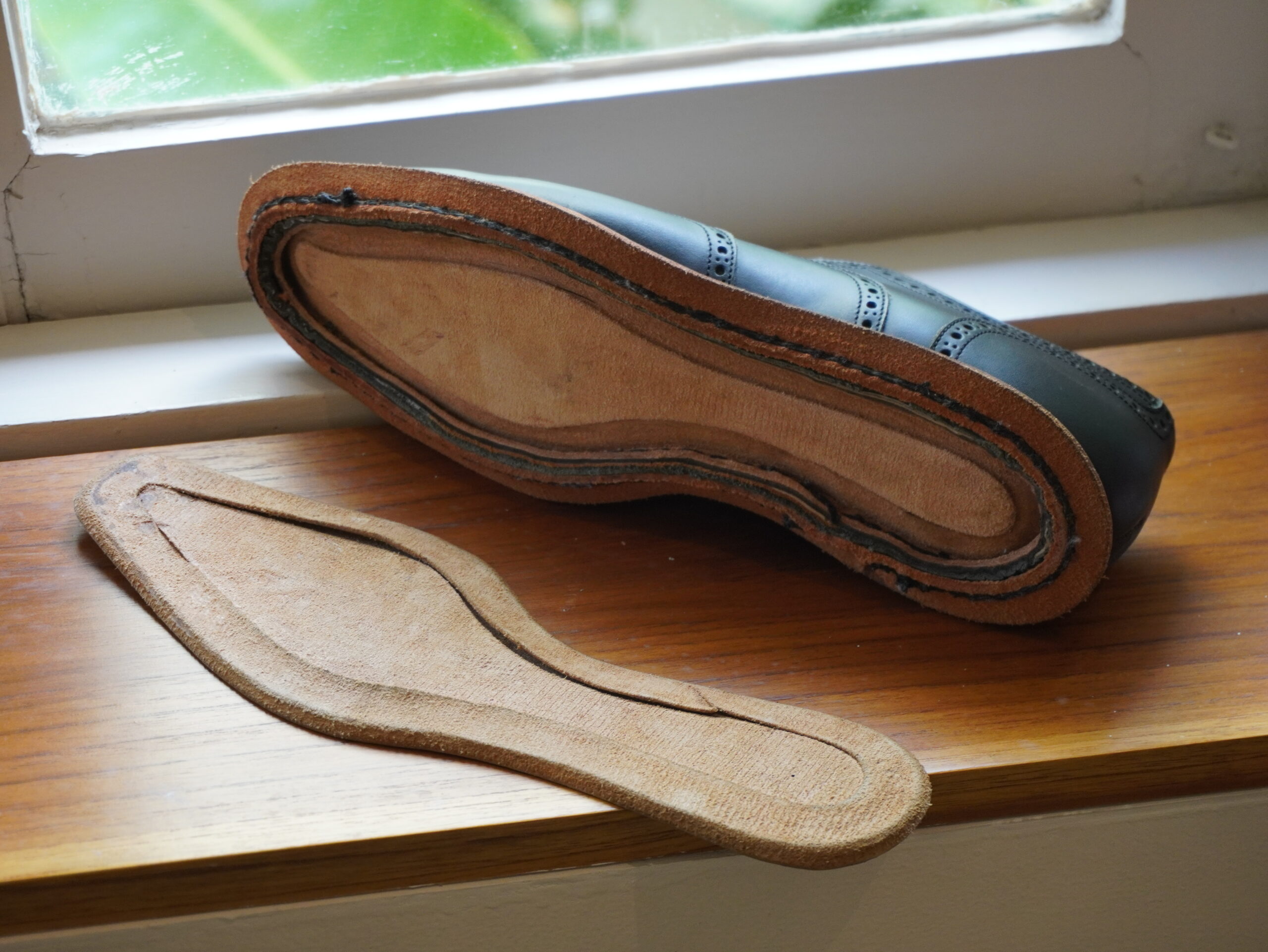

In the world of welted footwear, most factory-made Goodyear-welted shoes use a canvas rib embedded into the insole. It’s fast, it’s consistent, and it works. If it didn’t, it would be the most widely used method. But for the true shoe snobs among us, there’s a whisper: cutting the leather holdfast into the insole, stitching the welt directly through leather, is “superior.” With Bridlen, that whisper becomes a talking point as it is so rare these days. In fact, Bridlen’s leather holdfast (or channel) is cut directly into the insole rather than relying on a glued canvas rib.
For many shoe snobs out there, that detail carries weight — it suggests a certain confidence in materials and technique and is more reminiscent of a ‘handmade’ shoe. And frankly, it’s a move you rarely see in a production brand where profit margins matter.
👉Read more articles about Bridlen here

What Is the Leather Holdfast / Channel Method?
Let’s break it down:
- In standard Goodyear-welted shoes, a canvas strip (rib) is cemented onto the insole. The welt is then sewn through that rib and into the outsole.
- In the cut leather channel method, the insole itself is grooved or “channeled,” so the welt is stitched directly through leather.


Why Shoe Snobs Care
Enthusiasts argue that this method creates:
- Stronger unity of materials — leather meeting leather, no fabric in between or glued pieces.
- More Resoles — no canvas breakdown/deterioration
- Potential for greater longevity — provided the leather quality and execution are good.
Whether it is objectively better depends on many factors, but it has long been regarded as the more traditional, purist approach.


The Case for Resoling
One of the biggest arguments against canvas ribs is what happens when the shoes eventually need a resole. Over time, the rib — being fabric glued to leather — can deteriorate, separate, or collapse under repeated stress. When that happens, resoling becomes more complicated, sometimes requiring a cobbler to rebuild the rib entirely before they can attach a new sole.
By contrast, when the holdfast is cut directly into the insole leather, there’s no glued-on component to fail. The stitching is anchored in the insole itself, which often makes for a more secure and reliable hold, and thus resole. For shoe enthusiasts who plan to wear and repair their shoes for decades, this detail alone is a strong selling point.


Why This Is Rare in a Production Brand
For high-volume production, inserting a canvas rib is simpler, quicker, and more forgiving. Cutting a leather channel, on the other hand, requires more skill and allows less margin for error. Mistakes mean wasted insoles, which is why most factories stick with the rib.
Bridlen doing this is therefore significant. It signals that they’re willing to put in extra time and accept the added risk for a detail that many in the shoe world consider premium. It’s the kind of thing usually reserved for bespoke or small workshop shoes — not larger production runs.
And while it might seem like a small, hidden feature, these are the sorts of touches that excite enthusiasts and reinforce why Bridlen has been steadily building its reputation among shoe snobs worldwide.
Does this detail matter to you? Did you even know this was a ‘thing’? Share your thoughts below.
Learn more about Bridlen here: https://bridlen.com/
You can also find Bridlen shoes sold on The Shoe Snob Shop: https://www.theshoesnob.com/collections/bridlen